What If Edison Had an AI Assistant?
The Rising AI Sea, part 4: AI as a partner in creating new things
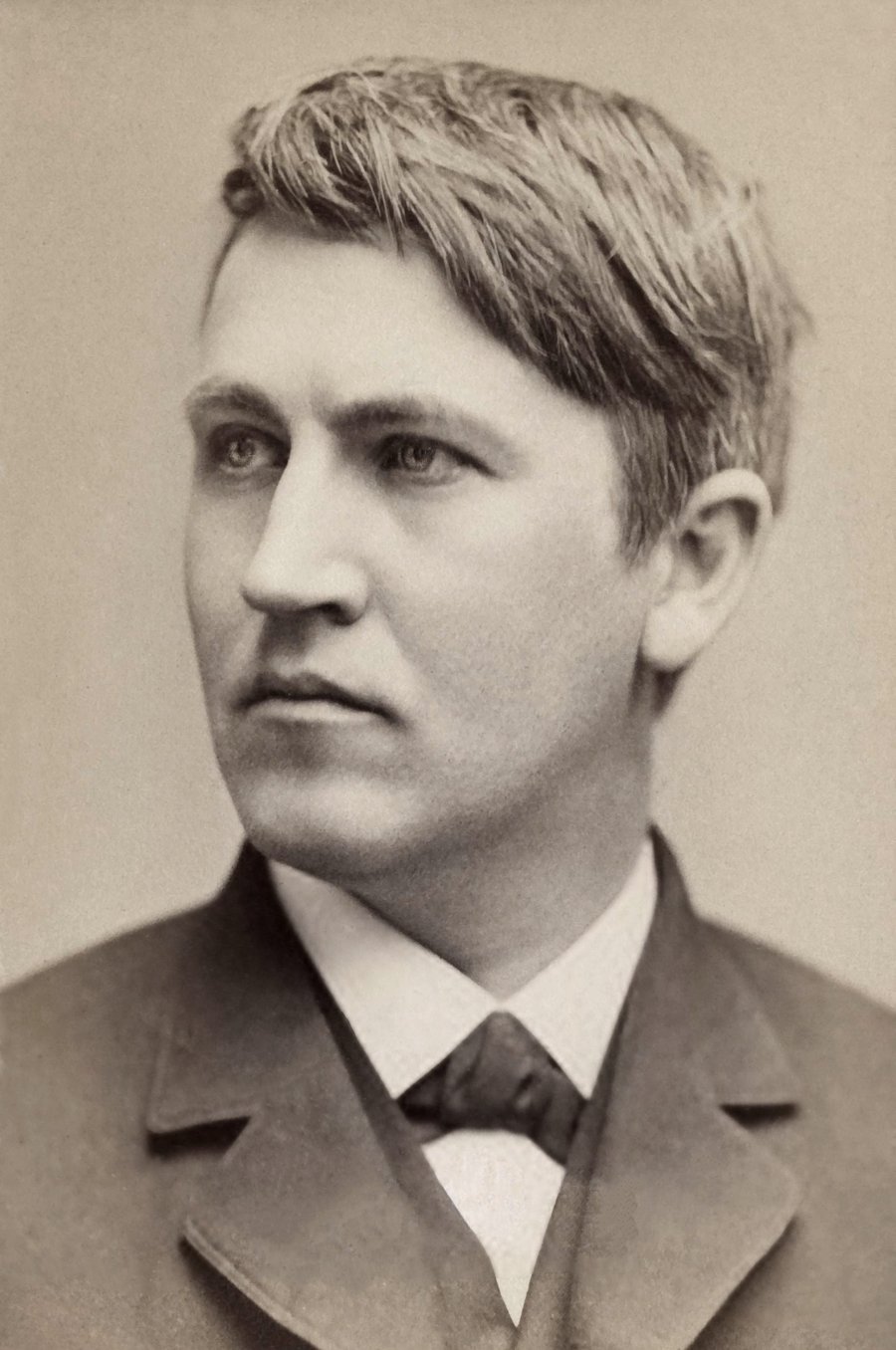
Thomas Edison in 1878, a year before his first successful carbon-filament lamp. Photo: Library of Congress, public domain, via Wikimedia Commons.

In this series, I have described three ways to see AI: as a tool (everything looks like a nail), as a toolbox (we see only a few of the many tools), and as an assistant that understands ideas and acts on them. Today I want to add a fourth: AI as a partner in creating NEW things.
Technological progress rarely comes from a "Eureka". It is a stepwise process, like Edison trying thousands of materials to make electric light practical. It takes time and, more critically, people to create these steps.
The new AI bots can DO things. Can we imagine Edison telling his AI assistant: "Use a blend of silk, cotton and bamboo fibres in equal parts and create a filament. Test it and report your findings"? And within seconds, asking for another filament type to test?
(History is not far off: Edison's first success, in 1879, was a carbonized cotton thread, and later carbonized bamboo.)
There are two lessons in this example:
- How little effort Edison would need to check thousands of filaments.
- How fast AI would handle these tasks (assuming it has access to "physical" robots for the actual doing). Today the physical doing is the limit; the thinking, testing plans and organizing are already here.
What about some other exchanges, like:
Edison: Please organize the results based on filament brightness, lifetime and electricity consumption.
After reviewing the output:
Edison: Based on the current findings, can you propose a filament composite that will optimize brightness, lifetime and electricity consumption?
Now we have asked the assistant to create a new set of filaments, including, possibly, some Edison never thought of.
And what about asking Edison's assistant: "Given the current technology, what is the best way to light our streets?"
What about your business?
How does this apply to your enterprise, to you as a businessperson, or to any employee of your organization?
Take a small bakery. The owner could ask: "Based on last year's sales and the weather, propose three new products for this winter, and estimate the cost of each." The assistant does not just answer; it proposes something new, and the owner decides.
I do not have one answer for everyone, because we are individuals with unique needs, perceptions, values and goals. I know, though, that the cost of using an AI assistant to invent NEW ways of helping is right there, now.
So try it this week. Ask your assistant not for an answer, but for an idea you didn't have.