Staying Afloat as AI Rises: Hammer, Toolbox or Assistant?
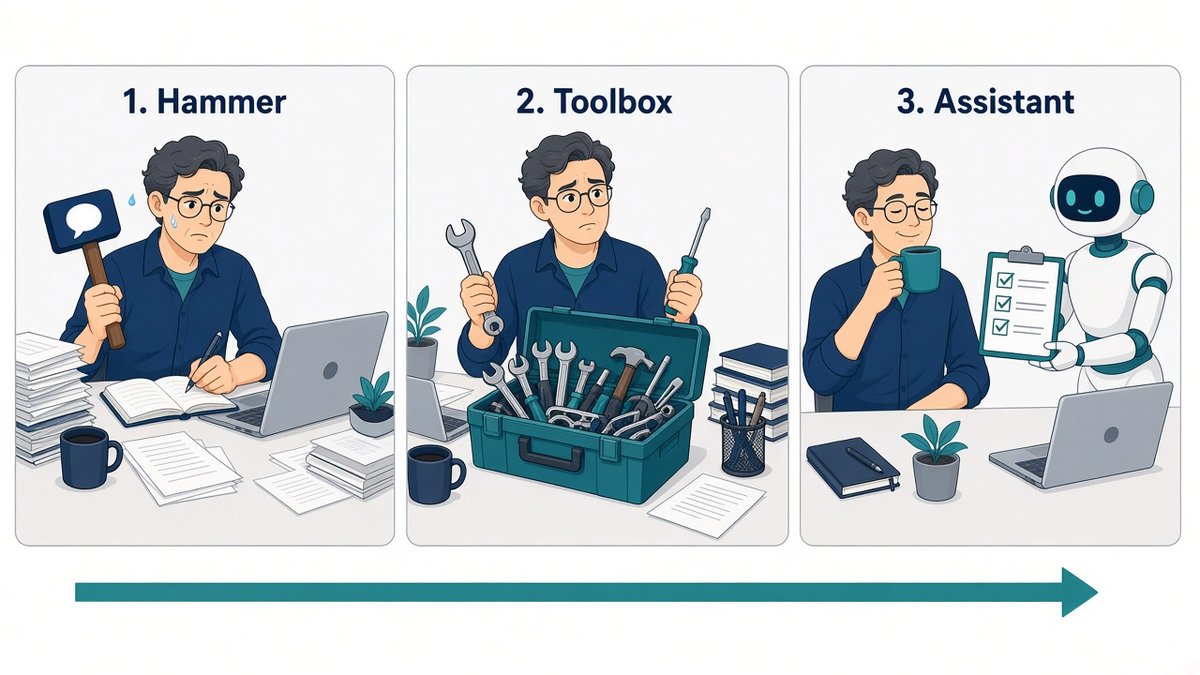
In The Rising AI Sea, I wrote that AI is rising like the tide. It has not slowed down. It changes by the day. After my last post, a reader told me they would need to learn a lot before they could even start using such a tool. I hear that often. Many people feel they are already drowning. You don't need to learn everything. You need to know where you stand. Knowing which of three buckets you are in is how you stay afloat.
Recently I spent twenty minutes face to face with a friend who has a wonderful dream: he wants to start an adventure tour company. Mostly, I just listened. He told me he had already "used AI" for the project. When I asked how, he said he had asked ChatGPT for a few suggestions here and there. Useful, he said, but nothing more. He had no idea how much AI has changed in the past year.
I hear some version of that story almost every week. It brings me back to a simple question:
How are you using AI for you or your business?
In my experience, most people see AI in one of three ways. None of them is wrong. But each one leads to very different results.
Bucket 1: AI is a hammer
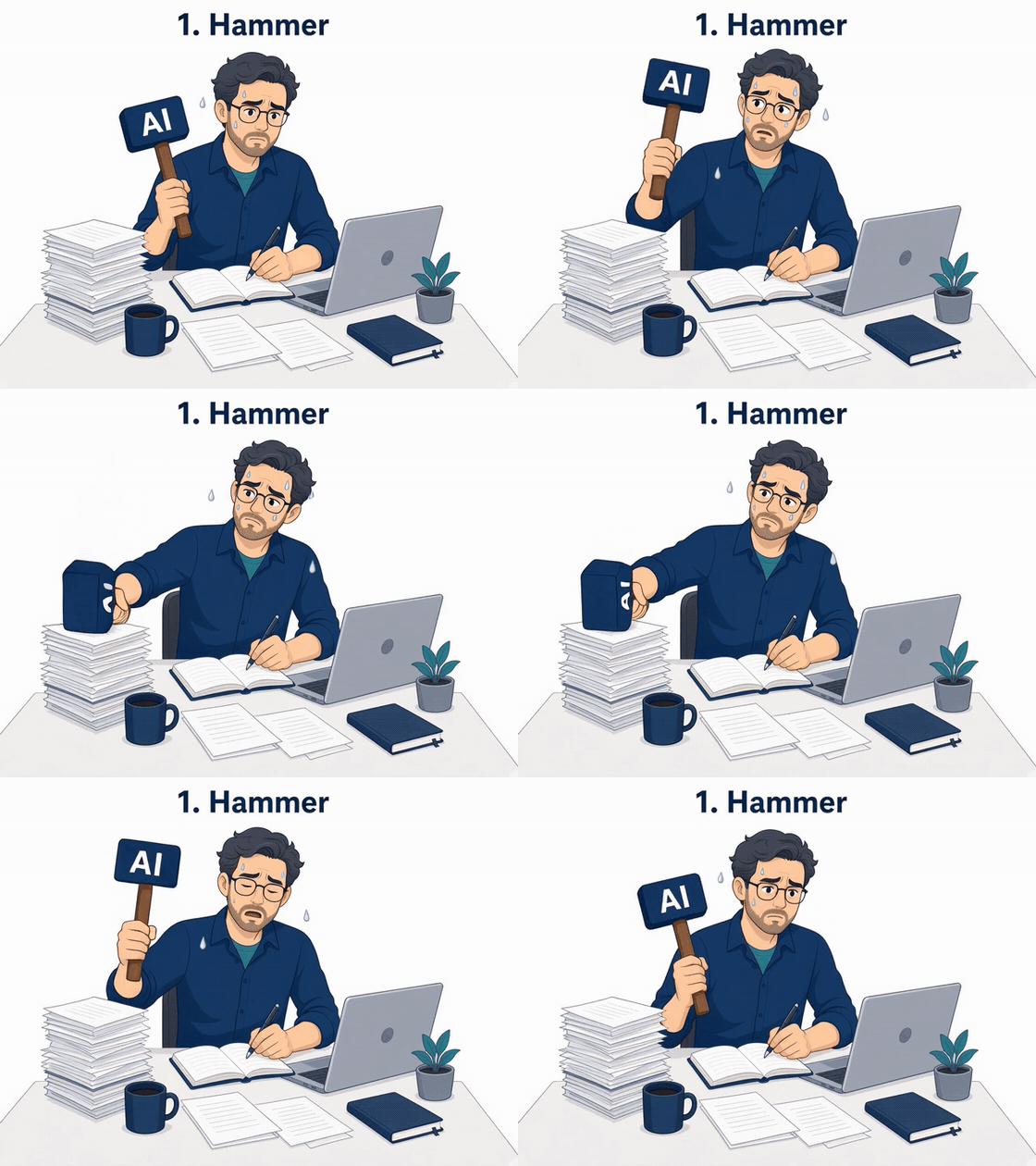
You know the saying: when all you have is a hammer, everything looks like a nail. Many people use AI exactly like that. They open ChatGPT, ask a question, get an answer, and close it.
It works. It can save you a few minutes. But it is a bit like owning a car and only using it to listen to the radio.
You're here if... you use AI now and then for quick questions, you copy the answer somewhere else, and AI feels more like a clever gadget than a helper.
A good next step: pick one task you repeat every week, such as writing a client update or preparing a quote, and ask AI to help you with the whole thing, not just one piece of it.
Bucket 2: AI is a toolbox
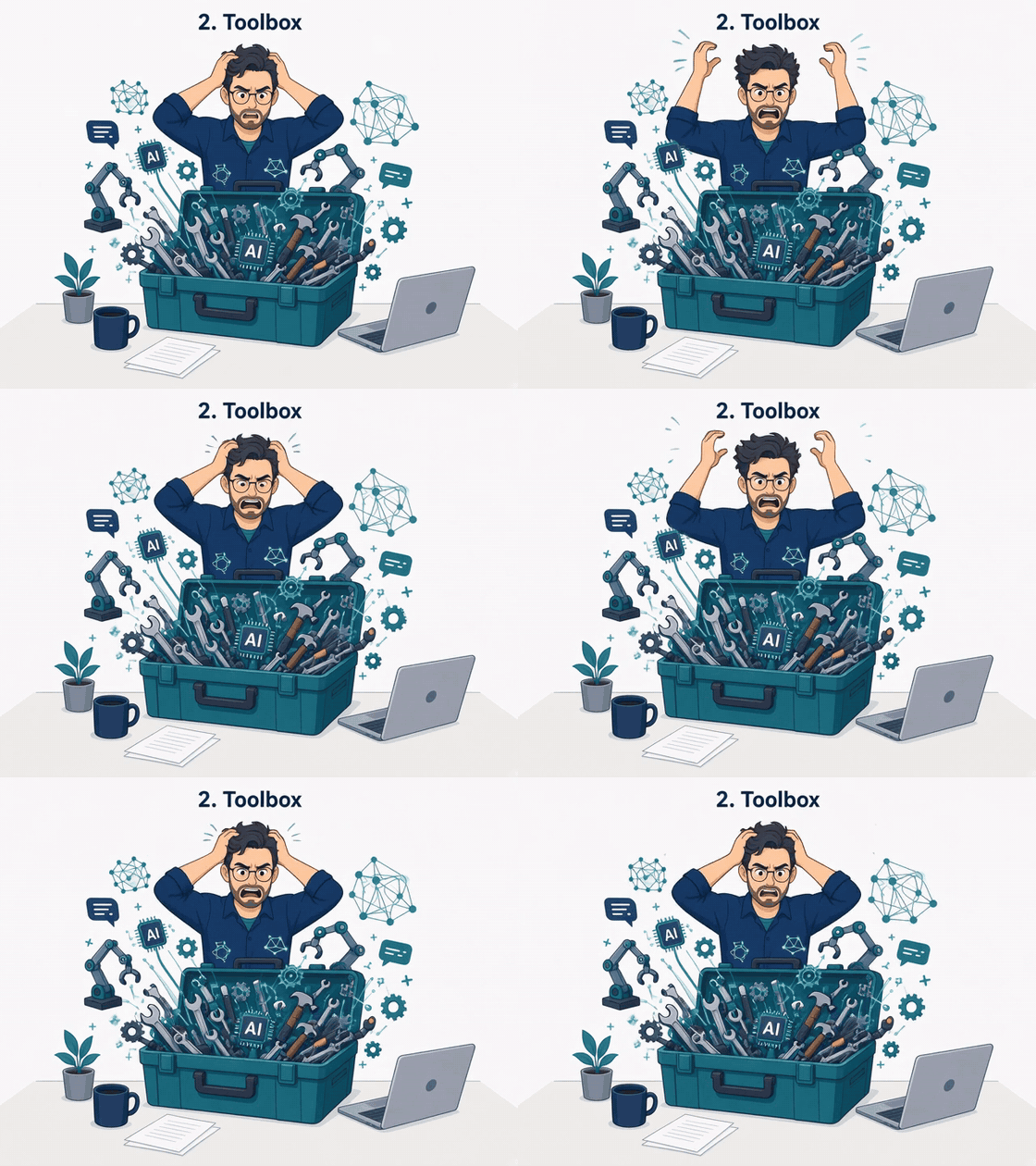
Other people have gone further. They know there are hundreds of AI tools out there, with new ones every week. They have tried a few. But here is the catch: in a toolbox that big, you only really see the few tools you already know how to use. Everything else becomes noise.
This is where many business owners get stuck. They spend more time reading about tools than using them. This is where the rising sea feels the deepest.
You're here if... you have signed up for several apps and none of them really stuck, you feel there must be a "right" tool you are missing, and you are not sure where to begin.
A good next step: stop starting with the tools. Start with one problem in your business, the thing that eats your time or keeps you up at night, and choose only what helps with that.
Bucket 3: AI is an assistant
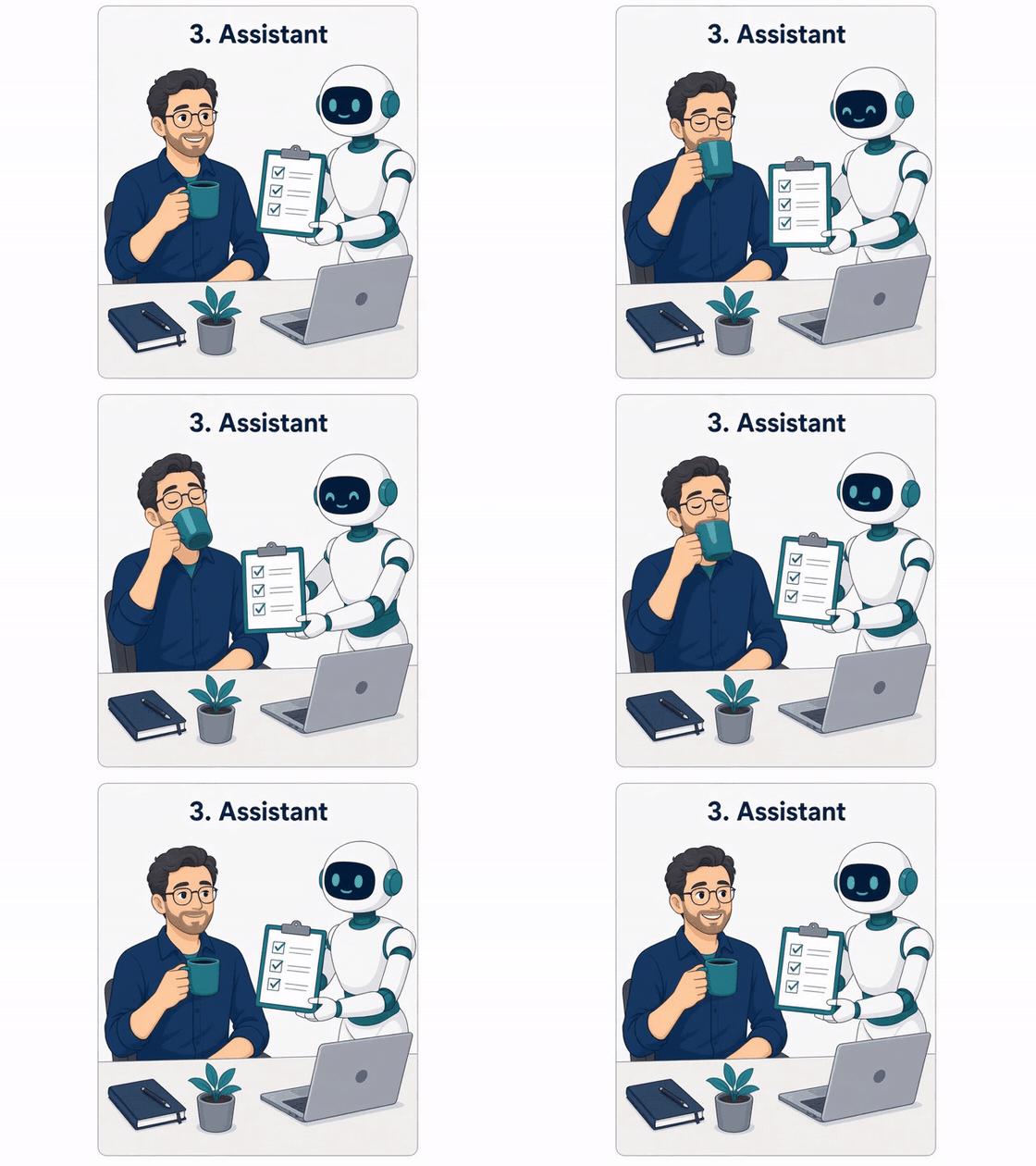
This is the shift my friend had not seen yet. An AI assistant does not just answer a question. It understands what you are trying to do and acts on it, within the limits you set.
Together, we sketched a small team of assistants for his tour company:
- one for planning and setting up the business: the plan, permits, suppliers;
- one for itineraries and logistics: routes, lodging, equipment, timing;
- one for marketing and the website;
- one for bookings and customers;
- one for finances: pricing, budget, cash flow.
Take the bookings assistant. When a customer writes to the company about a tour, the assistant answers the customer's questions, in my friend's tone. Once the customer signs up, the assistant sends them the pre-departure checklist. After the trip, the assistant writes to the customer to thank them, ask how it went and invite a review. My friend reads and approves every message: my friend stays in charge. The assistant does the routine, and my friend spends his time on what only he can do.
You're here if... you want AI to take care of the routine rather than just answer questions, you think in terms of jobs to be done rather than apps, and you want more time for the work that matters most.
A good next step: start with two assistants, not five. Learn what works, adjust, then add more.
A word of honesty
I don't want to oversell any of this. AI makes mistakes. An assistant is only as good as the instructions and information you give it, and it needs a human checking its work, especially at the beginning. That is exactly why I tell people to start small. My friend's first two assistants will not be perfect on day one. But they will improve week by week, and so will he.
I work this way myself. Today it is truly "I and my AI assistants": they help me with research, writing and follow-ups, and I make the decisions.
So, where are you?
Take a moment and be honest with yourself. Are you using AI as a hammer? Standing in front of a toolbox that is too big? Or are you ready to give a couple of assistants real work to do?
Wherever you are is a good place to start. The sea will keep rising. The point is simply to take the next step, and keep your head above water.
Download the one-page guide (PDF)
Not ready to talk yet? See how it works, what it costs and what you get, all on one page.
Download the one-page offer (PDF)
If you would like to think it through together, I offer a free 30-minute conversation. No pressure and no jargon: we look at your business, find where you are, and pick one or two places where an assistant could make a real difference. Book here: Free 30-minute conversation